
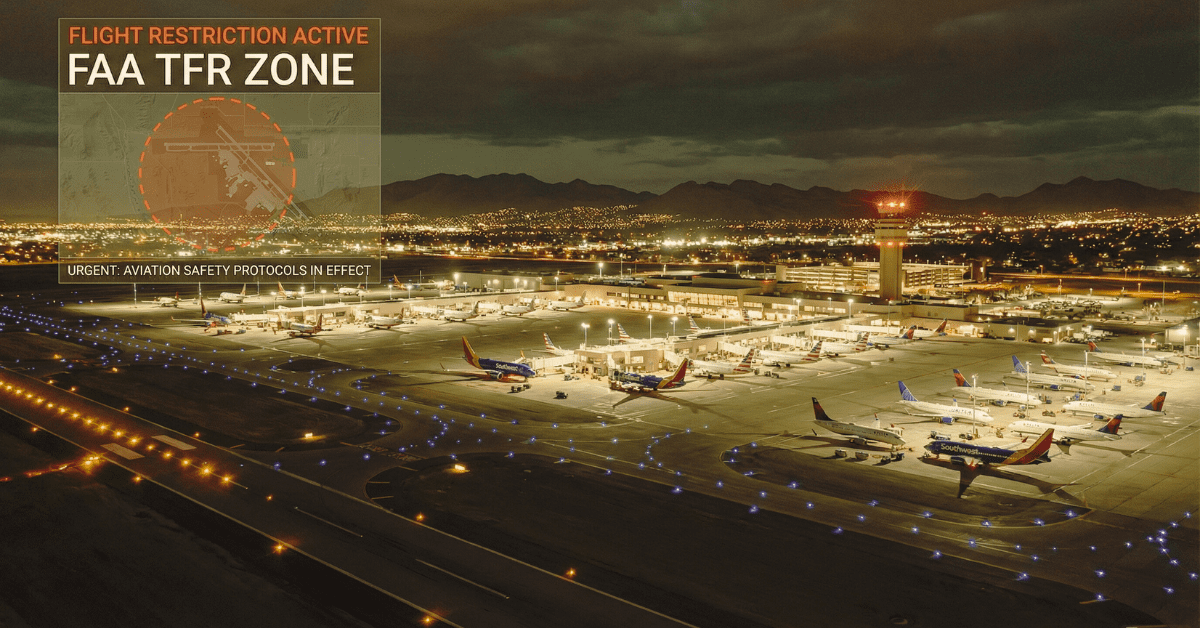
Late Tuesday night, El Paso, Texas, experienced an unexpected aviation halt when the Federal Aviation Administration (FAA) issued a temporary flight restriction (TFR) that grounded all flights over the city. By Wednesday morning, the restriction was lifted, but the sudden shutdown left travelers and aviation experts questioning the reason behind such a rare move. Understanding what TFRs are, why they are used, and how they affect air travel is crucial for pilots, drone operators, and the public.
A Temporary Flight Restriction (TFR) is essentially a “no‑fly zone” declared by the FAA. Think of it like a roadblock in the sky: pilots are prohibited from entering a specific airspace for a set period of time. TFRs are designed to protect public safety, national security, or special events. They can apply to all aircraft, including drones, unless special authorization is granted. Pilots are informed through official notices called NOTAMs (Notice to Airmen), which must be reviewed before every flight.
TFRs are more common than most people realize. They are issued during presidential travel, major sporting events like the Super Bowl, or emergencies such as wildfires and hurricanes. For example, “VIP TFRs” protect the President and Vice President’s movements, “Stadium TFRs” ban drones near NFL games, and “Special Event TFRs” cover gatherings like the United Nations Assembly. Emergency TFRs are also issued during natural disasters to keep skies clear for rescue aircraft.
What made El Paso’s shutdown unusual was its scope and timing. Grounding all flights over a major U.S. city overnight is rare. Even during national emergencies, restrictions are usually targeted and explained. In this case, the FAA did not provide a public reason. Reports suggest even military and emergency flights were halted, which is highly unusual. Authorities insisted there was no threat to residents, leaving many to wonder why the restriction was necessary. For context, the last time the country saw such sweeping restrictions was after September 11, 2001, when all U.S. airspace was shut down. Since then, localized restrictions have been common, but not blanket bans over major cities like El Paso.
The FAA maintains a real‑time list of active TFRs, accessible to pilots and the public. Drone operators can check restrictions using the B4UFLY app, which alerts them to no‑fly zones. Violating a TFR carries serious consequences: pilots may face certificate suspension or revocation, fines, and in extreme cases, unauthorized aircraft can be intercepted by military jets. This underscores why awareness is critical—not just for professional pilots, but also for hobbyists flying drones.
The El Paso incident highlights a few important realities. Airspace is national security, and even local restrictions can have wide‑ranging implications. Transparency matters—citizens deserve clear explanations when major disruptions occur. Preparedness is key—pilots and drone operators must always check for TFRs before flying. For everyday travelers, the event serves as a reminder of how interconnected aviation and security are. A sudden restriction can ripple through travel plans, emergency services, and even military operations.
While the FAA lifted the El Paso restriction quickly, questions remain. Was it a precautionary measure? A response to a security concern? Or simply an operational issue? Until officials provide clarity, speculation will continue. What’s certain is that TFRs will remain a vital tool in the aviation system. From protecting the skies during the Super Bowl to safeguarding communities during wildfires, they balance freedom of movement with safety.
For those affected, the El Paso shutdown was a rare glimpse into how fragile and controlled our skies can be. It wasn’t just about planes—it was about trust, transparency, and the balance between safety and freedom. As travelers, citizens, and drone enthusiasts, staying informed is our best defense. The FAA’s resources are available to everyone, and understanding TFRs ensures that when the skies close, we know why—and what it means for us..