
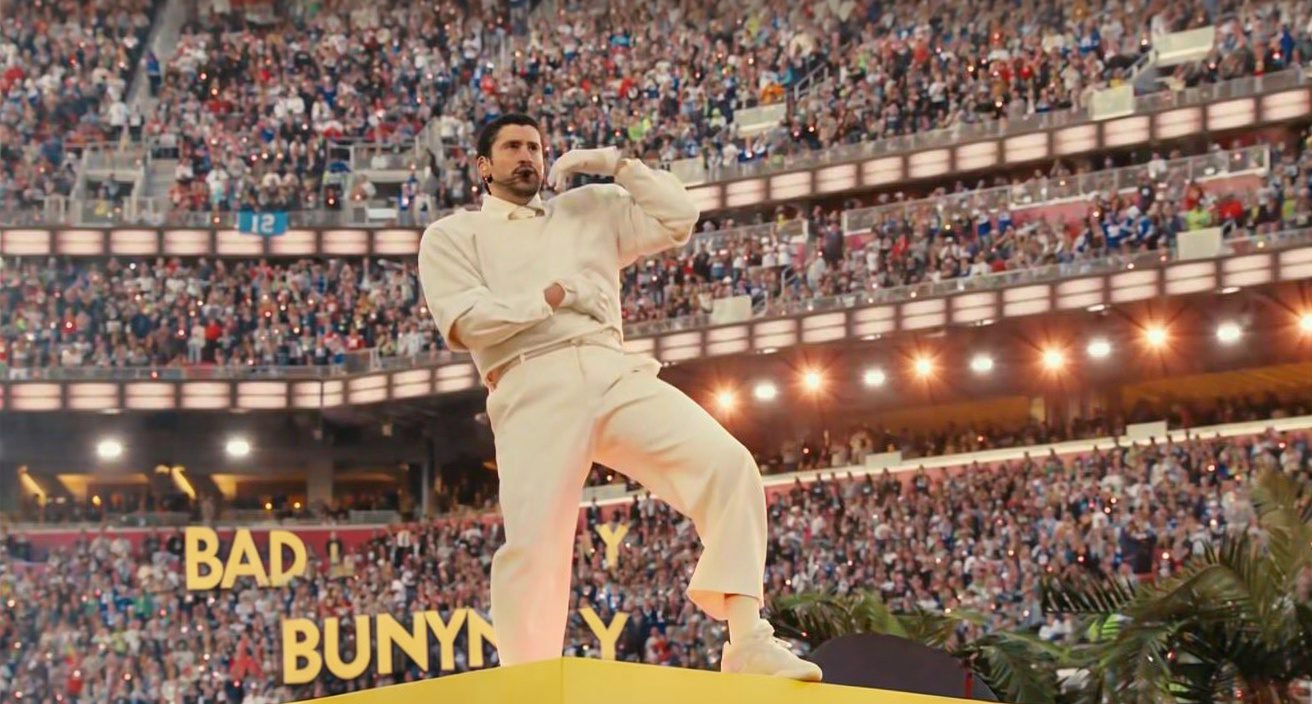
When the lights dimmed at Levi’s Stadium in Santa Clara, California, millions of Americans knew they were about to witness something extraordinary. The 2026 Super Bowl halftime show wasn’t just another performance—it was a cultural milestone. Headlined by Puerto Rican superstar Bad Bunny, the show blended music, fashion, and activism into one unforgettable spectacle that will be remembered for years to come.
A Bold Opening That Set the Tone
Bad Bunny kicked off the halftime show with his global hit “Tití Me Preguntó”, transforming the stadium into a vibrant celebration of Latin culture. The energy was electric—fans danced, sang, and cheered as the artist delivered a performance that felt more like a festival than a football halftime break.
This wasn’t just entertainment; it was a statement. For the first time in NFL history, the entire halftime show was performed in Spanish. That decision sparked debate in conservative circles, but for millions of viewers, it was a powerful reminder that America’s identity is built on diversity and inclusion.
As if Bad Bunny’s presence wasn’t enough, the halftime show featured surprise appearances by Ricky Martin and Lady Gaga. Together, they performed Bruno Mars’ “Die With a Smile”, creating a fusion of voices that bridged generations and genres. Gaga, fresh off her Grammy wins and global tour, brought her signature theatrical flair, while Ricky Martin added a nostalgic touch for fans who grew up with his music.
Fashion That Spoke Volumes
Bad Bunny is known for his fearless approach to fashion, and Super Bowl 2026 was no exception. Styled by Storm Pablo and Marvin Douglas Linares, he appeared first in a cream-colored ensemble—collared shirt, sweater, chinos, and sneakers—that radiated understated elegance. Later, he switched to a double-breasted white suit and tie, defying expectations of flashy halftime costumes.
The accessories were equally striking: a Royal Oak Audemars Piguet watch crafted in 18-karat yellow gold with a malachite dial. This choice reflected his ability to balance luxury with authenticity, reinforcing his reputation as a trendsetter who dresses for himself, not for the crowd.
Bad Bunny’s halftime show came just days after his historic win at the 2026 Grammy Awards, where he became the first Latino artist in the ceremony’s 68-year history to win Album of the Year for “Debí Tirar Más Fotos.” His acceptance speech wasn’t just about music—it was about justice. He used the moment to call out ICE (Immigration and Customs Enforcement), declaring:
That message carried into the Super Bowl, where his performance symbolized resilience, pride, and the fight for recognition.
Why is Bad Bunny's performance important for America?
The Super Bowl halftime show has always been more than just entertainment—it’s a reflection of American culture at a given moment. From Michael Jackson to Beyoncé, each artist has left their mark. Bad Bunny’s performance, however, was groundbreaking because it challenged the traditional boundaries of language and representation.
For Latino communities across the U.S., it was a moment of validation. For younger generations, it was proof that authenticity and individuality can triumph on the biggest stage in sports. And for America as a whole, it was a reminder that unity doesn’t mean uniformity—it means celebrating differences.
Bad Bunny’s halftime show is already being hailed as a turning point for Spanish-language music in mainstream American culture. His ability to headline the most-watched television event in the U.S. proves that Latin music isn’t just a niche—it’s a global force.
The performance also sparked conversations about representation in sports and entertainment. While some conservative groups offered alternative halftime programming, millions tuned in to watch Bad Bunny, signaling a shift in what audiences value: authenticity, diversity, and bold artistry.
Bad Bunny’s Super Bowl 2026 halftime show wasn’t just about music—it was about identity, pride, and progress. He brought Puerto Rican culture to the forefront, challenged stereotypes, and reminded America that its strength lies in its diversity.
From his Grammy triumph to his bold fashion choices, from his Spanish-language setlist to his unapologetic activism, Bad Bunny proved that he is more than a performer—he is a cultural icon shaping the future of American entertainment.
As fans left Levi’s Stadium and millions turned off their TVs, one thing was clear: #SuperBow 2026 will forever be remembered as the night Bad Bunny made history.