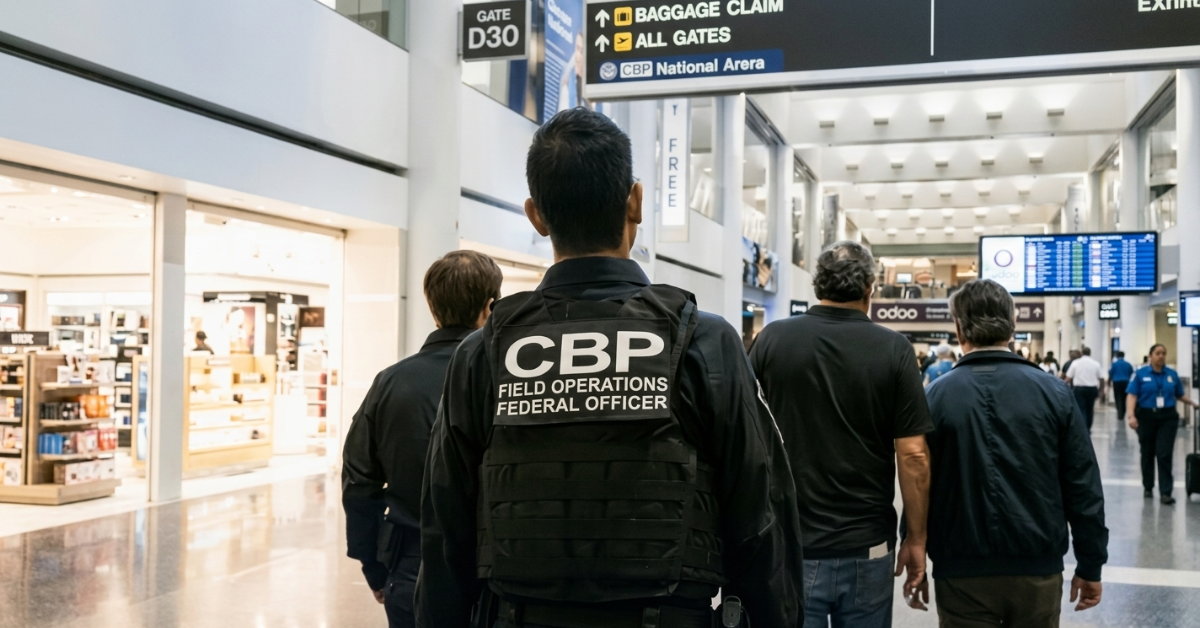
United States Customs and Border Protection officers in Louisville, Kentucky, seized 1,588 counterfeit jewelry items from two express shipments en route from Hong Kong to New York, which would have had a genuine value of $9.2 million. CBP experts, with the assistance of trademark holders, verified that these earrings, bracelets, necklaces, and rings—bearing the logos of brands such as Cartier, Gucci, and Chanel—were counterfeit. This seizure highlights the dangers of the counterfeit trade, which poses a threat to the economy, public health, and safety.
The jewelry was emblazoned with the logos and trademarks of global brands including Cartier, Chanel, Christian Dior, Fendi, Gucci, Louis Vuitton, Tiffany Van Cleef & Arpels and Yves St. Laurent. When CBP officers believed the items were counterfeit, they seized them immediately. The items, with accompanying documentation and photographs, were then sent to CBP’s Consumer Products and Mass Merchandising Center of Excellence and Expertise for analysis. Trade experts at the center reached out to the trademark holders, who confirmed that the products had been counterfeit and were liable for seizure.
The Threat of Counterfeit Goods
“The illegal scheme for counterfeit goods, it’s infiltrated all industries at this point,” says Phil Onken, Port Director for Louisville. It threatens America’s innovative economy, its businesses’ competitiveness, workers’ jobs and — at times — even national security.” He adds that those products also represent health and safety risks to consumers. So CBP recommends: always shop with legitimate vendors to protect your family and the economy. Although it has made shopping a lot easier, the expansion of e-commerce has also allowed counterfeit goods to infiltrate the market. Infringing upon Intellectual Property Rights (IPR), American consumers spend $100 billion a year on goods. American consumers make up 20% of the world’s trade in counterfeit goods. To educate consumers about this issue, CBP has launched the ‘Truth Behind Counterfeits’ campaign to reveal the real risks of counterfeit products.
Health Risks of Counterfeit Jewelry
To forge counterfeit jewelry, the manufacturers generally use inferior metals, chemicals and materials. These toxic substances can lead to skin irritation, allergies or long-term health problems. Children and those with sensitive skin are especially at risk. Authentic brands conduct rigorous quality testing; counterfeit products have no such process in place. As such, these products can break easily, have their plating or color wear off or leach harmful chemicals. CBP maintains lists of these hazardous products on its “Fake Goods, Real Dangers” webpage.
Additionally, the trafficking of counterfeit products can includes forced and child labor, organized crime networks. Trademark owners are defrauded, government income is eroded and the economy takes a big hit. However, in the U.S., selling fakes is a crime and those guilty may pay fines or do jail time. As a consumer, you can help avoid becoming a victim of such fraud.
CBP’s IPR Enforcement
U.S. Customs and Border Protection (CBP) is the largest law enforcement agency in the United States, part of the Department of Homeland Security. Overseeing a workforce of more than 67,000 agents and staff, CBP protects the country’s borders by land, air and sea. They enact processes to make trade and travel safe. CBP seized 78 million counterfeit items with a Manufacturer’s Suggested Retail Price (MSRP) of $7.3 billion during FY 2025. The agency’s aggressive stance to safeguarding Intellectual Property Rights is evidenced by these figures. CBP’s IPR Dashboard and the agency’s annual reports are great tools for media members and researchers. Trademark owners can register via e-Recordation (https://iprr.cbp.gov/s/) for border protection. If you have very information related to suspicious act, kindly submit tip using the e-Allegation. All such submissions are anonymous.
Shopping online has become part of our everyday routine. Counterfeit sellers are a major problem even on platforms like Amazon, eBay and others while millions of products can be found there. Goods are usually shipped as “express consignments” from destinations like Hong Kong, making their inspection particularly difficult. CBP uses advanced technology—like AI-driven scanners and X-ray machines—to catch these illegal shipments.
Tips for Consumers:
Look at the seller’s rating (try aim for those above 4 stars).
Read the product reviews and look at the photos.
Be wary if the price seems too good to be true.
Buy direct from the official stores of genuine brands.
Review the return policy carefully.
If you want to avoid 90% of the scams out there, do as I have outlined above.
Economic and Social Impact
The counterfeit trade costs the U.S. economy — or more specifically its GDP — approximately $250 billion a year. Small businesses suffer from unfair competition, and jobs are lost. In the jewelry world, genuine brands plow billions into R&D, but the prevalence of fakes means much of that spend goes up in smoke. It might appeal to customers with its lower prices but the price paid in the long run is bad.
Wider National Security Issues: The counterfeit goods trade can also provide financial backing to terrorist groups. CBP combats this threat through the use of intelligence-gathering strategies, as well as international partnerships.
CBP needs more people and better technology to perform its mission as e-commerce continues to expand. The agency is working to improve capabilities with drones, artificial intelligence (AI), and blockchain-based tracking systems. Trump administration has boosted appropriations on border security programs.
Join the Buy Real campaign 4. Report counterfeit sellers on social media.
CBP’s social media handles: @CBPChicago; OFO videos on YouTube.
U.S. Customs and Border Protection’s Role
U.S. Customs and Border Protection is America’s frontline. It is the main agency for integrated border management. Officers at 328 ports of entry interdict terrorism, narcotics and counterfeit goods. They move the trade and provide security that make our country more resilient by creating new solutions. Thanks to agencies like U.S. Customs and Border Protection, the United States is safe.” The seizure of fake jewelry is one example. As a consumer, be alert and buy genuine products. For more information, visit CBP. gov.